What is pellet and why is it used for heating
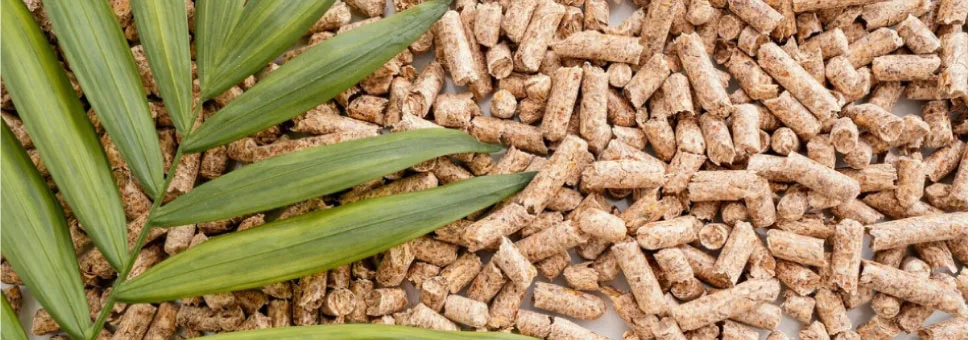
Pellet fuel is a biofuel produced from compressed wood and contains sawdust and wood shavings. It comes in the form of small cylindrical pellets with a diameter of 6-10mm and length of 10-30mm.
Production happens without chemical additives; binding is achieved exclusively through high pressure and the natural lignin contained in the wood. This makes pellet a clean and safe fuel.
The calorific value of pellets reaches 16-19 MJ/kg, which means that approximately 2 kg of pellets thermally equal 1 liter of heating oil. At the same time, the low moisture content (under 10%) ensures efficient combustion and high energy performance.
Pellets are typically available in 15 kg bags, which significantly facilitates transport and storage compared to other solid fuels like firewood.
Learn more: Economical heating: How to keep your home warm at low cost
How does a pellet boiler work
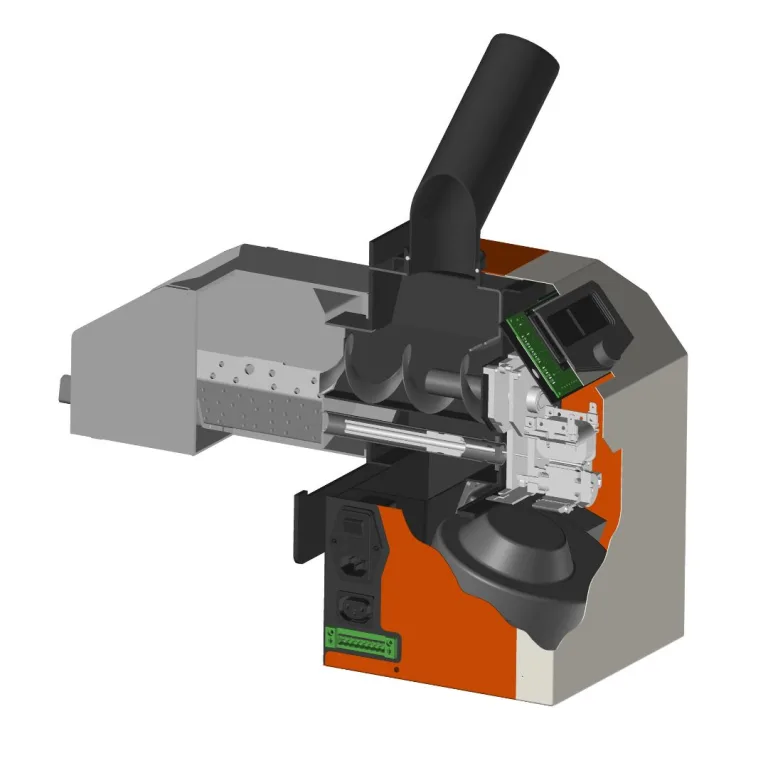
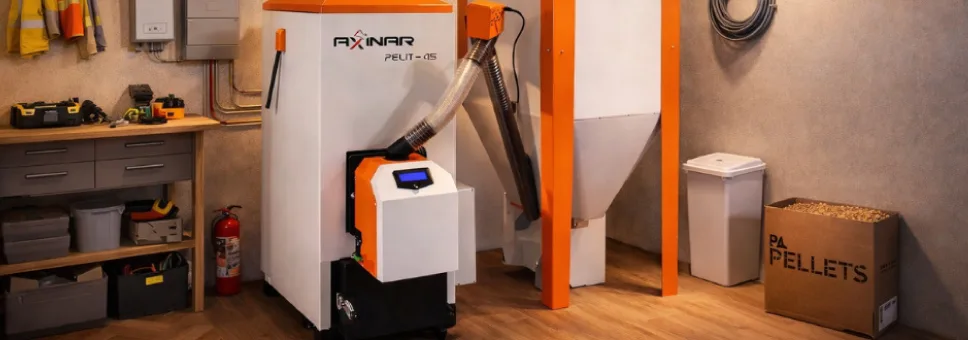
Pellet boilers operate on similar logic to conventional oil boilers, with the key difference that they use pellets instead of fossil fuels. Pellets are automatically transferred from the storage hopper to the combustion chamber through a feeding auger.
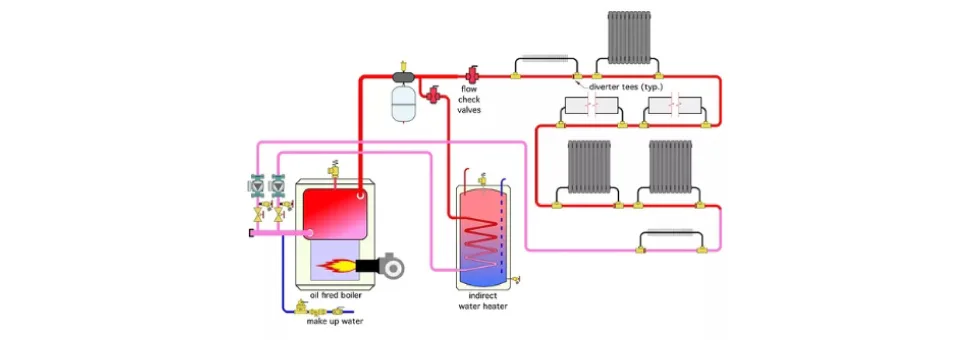
During combustion, heat is generated and transferred to the water in the heating circuit. The hot water circulates through radiators or the underfloor heating system, efficiently warming the spaces. With the addition of suitable equipment, pellet boilers can also cover domestic hot water needs for bathroom and kitchen use.
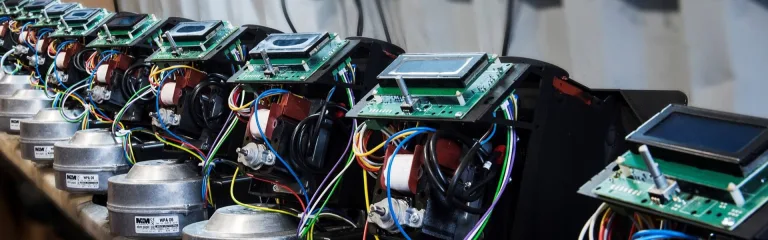
Modern pellet boilers feature advanced control systems that automatically regulate fuel feed and combustion process, ensuring stable performance, economy, and ease of use.
Advantages of pellet heating
Pellet heating stands out for its multiple benefits, both economically and environmentally. Below are the main advantages that make it a particularly attractive choice.
Operating economy
Pellet heating can offer savings exceeding 50% compared to heating oil. Indicatively, one kg of pellet costs approximately €0.30-0.40, while heating oil often exceeds €1.20 per liter. Even considering that approximately 2 kg of pellet is required for thermal output equivalent to 1 liter of oil, the total cost remains significantly lower.
Environmentally friendly solution
Pellet is a biofuel with an almost neutral CO₂ emissions balance. The carbon dioxide released during its combustion equals what trees absorbed during their growth. At the same time, dependence on imported fossil fuels is reduced.
Automatic operation
Unlike wood boilers that require frequent manual feeding, pellet boilers operate fully automatically. The fuel hopper offers autonomy for several days, depending on capacity and heating needs.
Easy fuel storage
Pellets are easily stored in bags, without requiring drying. They occupy less space compared to firewood and offer greater energy value per cubic meter.
You may also be interested in: SolBox: Convert Electric Water Heater to Solar System — The smart solution for any space
What to watch for before buying
Although pellet heating offers significant advantages, there are certain factors worth considering before making your final choice.
- Initial cost: Purchasing and installing a pellet boiler has a higher upfront cost compared to a conventional boiler. However, the investment pays back in a short time thanks to low fuel consumption.
- Storage space: Available space for the boiler and pellet hopper is required. For apartments, there are compact solutions that limit space requirements.
- Maintenance: Regular ash cleaning is needed, although in modern self-cleaning models this process is minimal. Pellet ash corresponds to approximately 1% of the fuel.
Pellet boiler installation: Where can it be installed
Proper selection of installation location plays a decisive role in the system’s operation and performance. Depending on space capabilities, different options exist.
Boiler room
This is the ideal solution for detached houses and commercial buildings. The dedicated space ensures proper ventilation, easy access for maintenance, and safe operation. According to legislation, installations over 45 kW require a dedicated boiler room.
Pellet boiler installation on a balcony
For smaller capacities (under 45 kW), balcony installation is feasible using compact boilers. These units have small dimensions and low flue requirements, often just 2 meters of Ø80mm diameter. Protection from moisture and weather conditions is essential.
Storage room or rooftop
Alternative solutions for cases where no boiler room or suitable balcony is available. In every case, consultation with a specialized technician is essential before installation.
Pellet heating in apartments
Using a pellet boiler in an apartment is absolutely feasible with the right choices. Compact and all-in-one boilers are specifically designed for limited spaces, integrating the boiler, burner, and hopper into a single unit.
For apartments, boilers of 15-30 kW are recommended, covering spaces from 80 to 250 m². Installation typically completes within 1-2 days and connection to the existing radiator system is simple.
Read also: What is OEM and how does it work?
Tips for proper combustion and maximum efficiency
Proper use and maintenance of the system ensures better performance and longer boiler lifespan.
- Choose quality pellet: Prefer certified pellet with low moisture and low ash content.
- Proper storage: Store pellet in a dry area, away from moisture.
- Regular maintenance: Clean the ash drawer according to instructions and schedule annual service.
- Use a thermostat: A room thermostat contributes to automatic regulation and further energy savings.
Conclusion: Who is pellet heating for
Pellet boilers are an excellent choice for those who want to reduce heating operating costs without compromises in comfort. They are suitable for both detached houses and apartments, with the appropriate solutions.
This is an investment with long-term benefits: lower cost, energy independence, and contribution to environmental protection.
Axinar pellet boilers
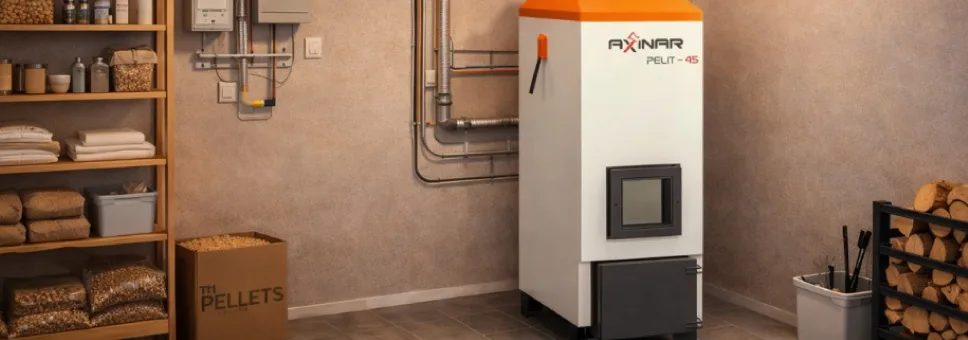
Axinar manufactures biomass boilers in accordance with European standard EN303-5, Class 5, offering high performance and reliability.
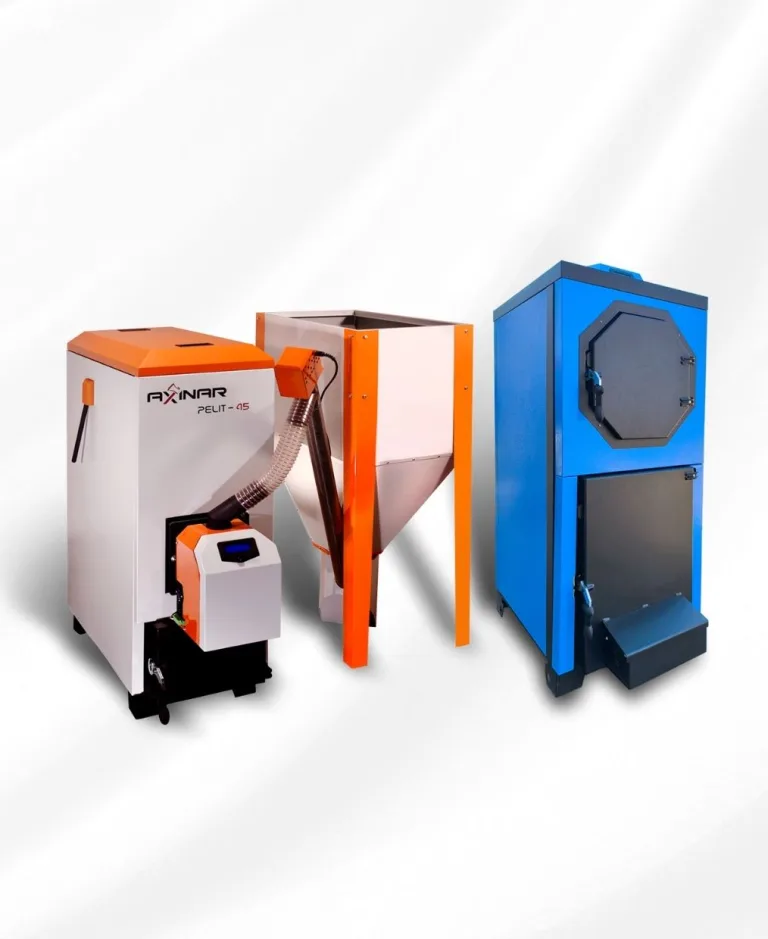
- Integrated PelletWork Systems: Complete heating solutions from 20 to 150 kW with PELIT boiler, burner, Auger feeding screw, and Abar pellet tank.
- All-in-One Calos Unit: Compact solution combining everything needed in a single unit, ideal for limited spaces.
- User-friendly control system: Easy-to-use control system, available in 40 languages, for comfortable monitoring and operation adjustment.
As a leading supplier of heating solutions, Axinar offers a complete range of biomass boilers that combine reliability, economy, and advanced technology, giving you the ability to choose the system that truly fits your space needs. With the right guidance and equipment, the transition to pellet heating becomes an investment with long-term benefit.