Secondary Metal Operations
Secondary metal operations in Thessaloniki: rivet installation, stud welding, laser marking of metals, rivet nuts and threaded inserts (helicoil). Final assembly and traceability, in-house.
9001
14001
Secondary Metal Operations
for Final Processing & Assembly
Secondary metal operations include specialised final processing and assembly tasks that complete a metal part before delivery. At Axinar, in Thessaloniki, we perform secondary metal operations in-house: rivet installation (blind rivets, threaded rivets), stud welding (stud welding / CD welding), laser marking of metals (fiber laser marking), rivet nuts and threaded inserts (helicoil).
Custom secondary operations are integrated into our production line, after laser cutting, press brake bending, welding, and before coating or galvanizing. This means that every part is delivered fully completed, with rivets, studs, threads and marking, without the need for an external subcontractor. Every secondary operation is performed with traceability and quality documentation.
We process steel, stainless steel (inox), aluminium, galvanised steel, copper and brass. Combined with laser cutting, MIG/TIG welding, CNC milling and powder coating, we handle complete metal structures from design to final assembly.
Cost of secondary operations: The price of secondary metal operations depends on the type of operation (rivets, stud welding, laser marking), the number of points per part, the material, the geometry and the total order volume. For series production, the cost of secondary operations per part decreases significantly. Send us your drawings for a free, detailed quote within 24 hours.
Our Secondary Metal Operations
Rivet Installation (Blind Rivets)
Rivet installation, blind rivets, threaded rivets and metal rivets in steel, stainless steel, aluminium and galvanised steel. Permanent mechanical connection without heat, ideal for thin sheets, profiles and structures that do not allow welding.
- Blind rivets (pop rivets), M3 to M8
- Threaded rivets, steel, stainless steel, aluminium
- Application on sheet thickness 0.5mm – 6mm
Stud Welding (CD Welding)
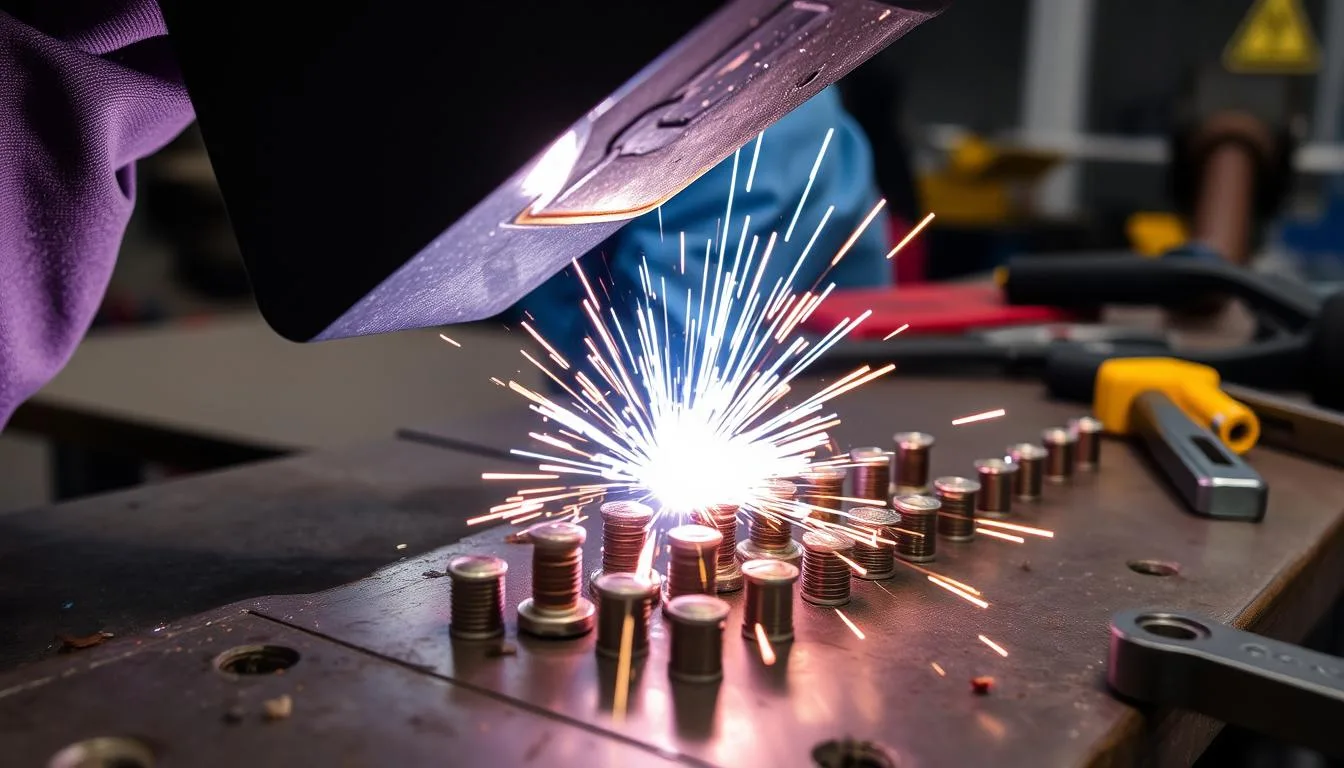
Stud welding with the CD welding method (capacitor discharge). Studs, nuts and pins are welded one-shot to thin metals without deformation or discolouration. Ideal for electrical grounding, mechanical components and metal structures.
- CD welding (capacitor discharge), M3 to M10
- Steel, stainless steel, aluminium, galvanised steel
- Minimum base thickness: 0.5mm
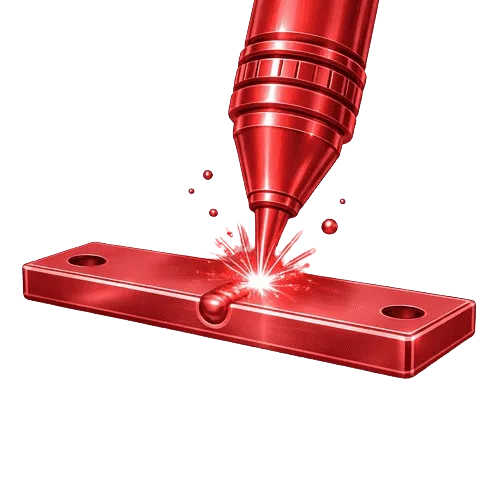
Laser Marking of Metals (Fiber Laser Marking)
Laser marking of metals (laser engraving) with fiber laser marking. Permanent marking of logos, serial numbers, QR codes, barcodes and technical data on any metal surface. Laser logo marking ensures traceability and branding on industrial parts.
- Fiber laser marking, steel, stainless steel, aluminium, copper
- Laser logo, serial number, QR code, barcode marking
- Permanent marking, withstands coating, galvanizing, abrasion
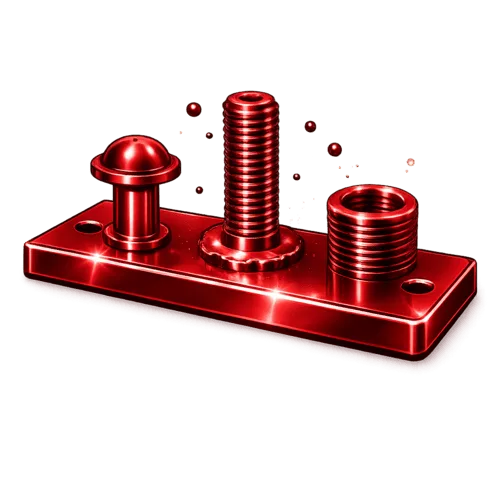
Rivet Nuts & Helicoil Threaded Inserts
Rivet nuts and threaded inserts (helicoil), creating a permanent internal thread in thin sheet metal and parts where there is not enough material thickness for a classic thread. Ideal for final assembly and easy disassembly.
- Rivet nuts, M3 to M12, steel / stainless steel / aluminium
- Helicoil (threaded inserts), thread repair & reinforcement
- Minimum sheet thickness: 0.5mm
Why Secondary Metal Operations at Axinar
Integrated In-House Production
Cutting, bending, welding, secondary metal operations, coating, galvanizing, all in one factory. One point of contact, one timeline, zero handoffs.
Speed & Custom Secondary Operations
Custom secondary operations, from one-off prototypes to series production. Integrated into the flow with no delays.
Traceability & Documentation
Every secondary operation is recorded with traceability. Laser-marked serial numbers, QR codes and quality control records to ISO 9001.
Metal Rivets, Full Range
Blind rivets, threaded rivets, rivet nuts, every type of connection in steel, stainless steel, aluminium. Rivet installation with precision pneumatic tools.
Stud Welding without Distortion
The CD welding method (capacitor discharge) welds studs to thin metals without thermal distortion, ideal for aesthetically critical surfaces.
Laser Marking, Permanent Marking
Fiber laser marking for laser-engraved logos, serial numbers and QR codes. Permanent marking that withstands every subsequent process.
Request a
Quote
Send us your drawings or photos and we will get back to you within 24 hours with a detailed quote. We accept DXF, DWG, STEP, PDF files or even a hand-drawn sketch.
Accepted files
What we need
Drawing or sketch, material, thickness, quantity. If you are not sure, we will guide you.
Contact
Email: sales@axinar.com
Phone: (+30) 2310 808 159