Material selection for sheet bending is not just about cost or corrosion resistance. Each metal behaves differently under bending: different springback, different minimum bend radius, different tolerances, different crack likelihood. A CAM program that works perfectly for S275 steel can ruin the piece if material changes to Al 6082 T6 aluminum.
Steel (S235JR, S275JR, S355J2)
The most common and predictable material for industrial structural bending.
- Minimum bend radius: 1×t (S235) to 1.5×t (S355), where t is thickness
- Springback: Medium (2–4°), well predictable with CAM software
- Thicknesses that bend: 0.5–20 mm in typical press brake, 0.4–3.2 mm in Salvagnini panel bender
- Cracks: Rare if radius is correct, exception is cold-rolled thick material where structure has “fibers”
- Special: Cold-rolled (DC01) easy, hot-rolled (S275) with larger radius, high-strength (S460+) demanding
Stainless (Inox 304, 316L, 430)
Harder material for bending, more springback and sensitivity to die scratches.
- Minimum bend radius: 1.5×t (304 thin) to 3×t (304 above 5mm)
- Springback: High (5–8°), material “returns” more than steel after bending, over-bending needed
- Thicknesses: 0.4–6 mm typically (304), thinner materials easier
- Special precautions: Use PU films or plastic dies to avoid scratches on visible surface. On 316L, particular attention to contamination with rust (reduces corrosion resistance)
- Work hardening: Inox hardens during bending, second pass on same angle can cause crack
Aluminum (Al 5754, 6082 T6, 5083)
Aluminum requires separate handling, cracking is a real risk, especially on 6082 T6.
- Minimum bend radius: 1×t (5754 soft) to 4×t (6082 T6), tempered T6 aluminum needs large radius
- Springback: High (5–10° or more), depends heavily on alloy
- Thicknesses: 0.5–8 mm typically
- Cracks: The main risk. 6082 T6 must either use large radius (2×t+) or be heated to 200°C before bending (annealing)
- Direction: Bend axis must be perpendicular to material rolling direction for minimum crack likelihood
Special Materials
Galvanized Steel (Pre-galvanized)
Hot-dip galvanized steel that’s bent after galvanizing. Zn can flake in the bend area, for responsible applications, better to bend first and galvanize after.
Hardox (Wear-resistant steel)
Very hard, difficult to bend. Requires large radius (3×t) and special tools.
Corten (Weathering steel)
Similar to S355 in behavior, but surface develops controlled rust over time.
Minimum Bend Radius Table (r/t)
| Material | Min r/t | Springback | Notes |
|---|---|---|---|
| Steel S235JR | 1.0 | Low | Predictable |
| Steel S355J2 | 1.5 | Medium | – |
| Inox 304 (≤2mm) | 1.5 | High | Work hardening |
| Inox 316L (≤3mm) | 2.0 | High | Contamination-sensitive |
| Aluminum 5754 | 1.0 | Medium | Easy |
| Aluminum 6082 T6 | 3.0–4.0 | Very high | Crack risk |
| Galvanized (pre-gal) | 1.5 | Low | Zn flaking |
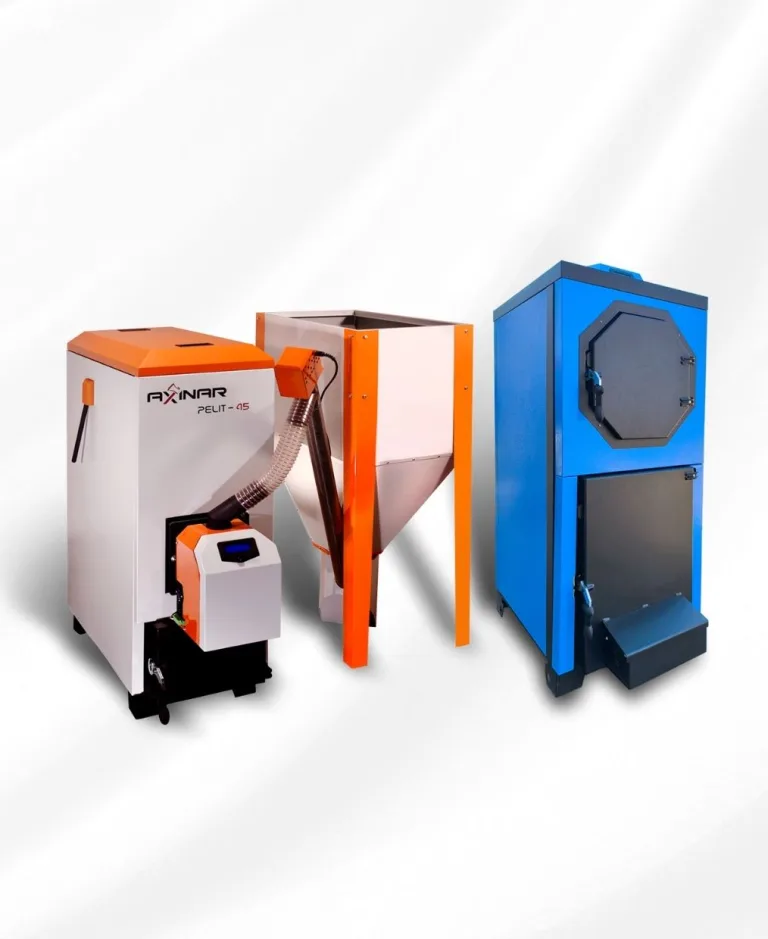
AXINAR works with all materials, from galvanized PV mounts to inox food equipment. Production from prototypes to OEM series.
- Salvagnini panel bender for thin (0.4–3.2mm)
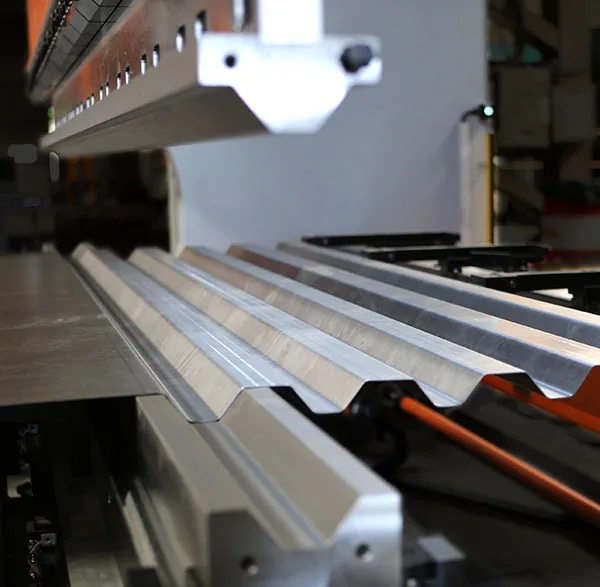
- Press brake for thick (up to 20mm)
- Tolerance control on every batch
Request a Quote for Your Project
Send us sketches, CAD drawings, or a description of your project, and we’ll respond within 24 hours with a technical estimate. We cover everything from prototypes to mass OEM production.
See also panel bender vs press brake.