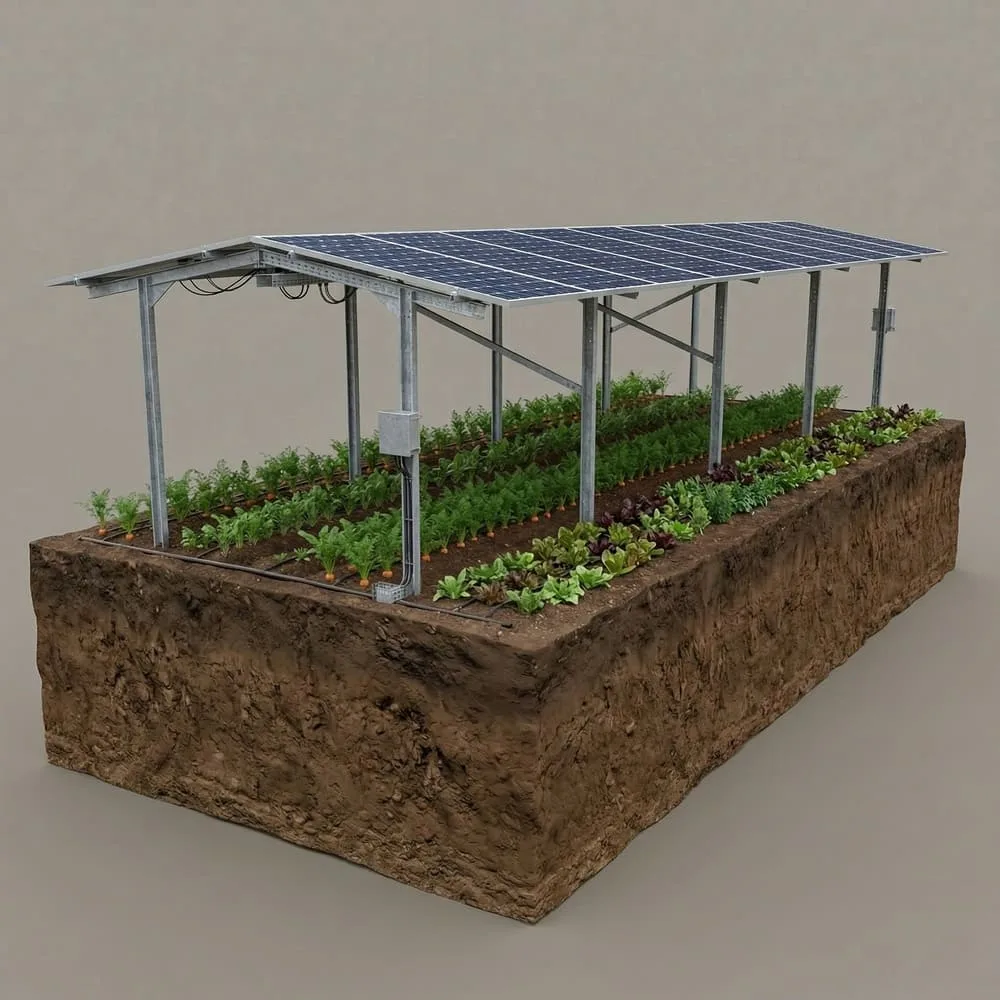
Agrivoltaics is one of the most interesting developments in RES. The basic idea: using the same land simultaneously for agricultural production and electricity generation. East-West orientation, particularly, provides a unique synergy, high energy performance without significantly “stealing” from agricultural use.
What East-West Orientation Means
In classic ground mount systems, PVs face south with ~30° tilt, maximum production at noon. In East-West:
- Two rows of panels per “table”, one facing east, other west
- Low tilt (typically 15–25°)
- Produces energy from morning (east panels) until evening (west panels)
- More uniform daily curve, instead of a peak at noon
Advantages for Agricultural Production
1. Uniform Shading
Classic south arrangements shadow all the land below them at noon. East-West arrangements move the shadow all day, giving plants more alternating sun and shade periods, ideal for sensitive crops that burn in noon sun (lettuce, radishes, some fruits).
2. Denser Placement
Because low tilt allows tables to be closer to each other (less shading between them), 30–50% more panels can be placed per hectare, but with wide gaps between them on the ground below.
3. Crop Protection
Panels protect from hail, extreme heat, and excessive UV radiation, increasing quality of certain products.
4. Water
Less evaporation from ground below panels means reduced irrigation needs 15–30%, significant in dry-hot areas of Greece.
Advantages for Energy Production
1. Uniform Daily Production
Instead of one big peak at noon, East-West arrangement gives two smaller peaks (morning + afternoon) with more flat curve in between. This means:
- Better match with Greek consumption profiles (morning residential, afternoon commercial)
- Less distribution to market or battery
- Better medium-term price if selling in net metering
2. Higher Power Density
Denser placement means greater kWp installed power per stremma, although nominal production per kWp is slightly lower (~5%) than south arrangement.
3. Bifacial Panels
Low tilt and height from ground allow bifacial panels to give 15–25% extra production from back side.
Technical Characteristics of AXINAR East-West Agrivoltaics
- Structural steel: S350GD (high-strength galvanized)
- Coating: Magnelis®, higher corrosion resistance than plain hot-dip galvanizing (suitable for agricultural chemical environments)
- Foundation: Piling (fully reversible, at end of life, pulled out and land returns to original state)
- Table length: Up to 80m in continuous arrangement
- Static study: Free from AXINAR
Subsidies & Legislation
Recovery and Resilience Fund (TAA)
Support for RES in general has been provided. Agrivoltaic installations have priority within the TAA agricultural programs.
NThEP (New Energy Institutional Framework)
Integration of agrivoltaics has been recognized as priority for future energy subsidy programs.
Law 4964/2022 & Following
Reference to agrivoltaics as a separate category of RES installations.
Practical Installation Issues
- Crop selection: Ideal for lettuce, edible radishes, strawberries, some medicinal plants, viticulture, olive groves with reduced density
- Reversible system: AXINAR uses piling, leaves no permanent marks on the ground
- Machinery access: Design allows passage of agricultural machinery between tables
- Static study: Essential for documentation to Planning Office and DEDDIE
AXINAR East-West system lets you maintain agricultural use of your land in parallel with electricity production, without permanent ground intervention.
- Steel S350GD, Magnelis® coating
- Piling, fully reversible installation
- Tables up to 80m, free static study
Request a Static Study & Quote
Send us your project basics, square meters, roof or ground type, zone, PV capacity, and we’ll respond within 24 hours with a recommended mounting system and free static study.
See bifacial PV or PV tilt angle.